Metabolic Flex isn't a diet. It's a sequence: measure your metabolism, use the right tools to
move fast, and build the behaviors that let you need the tools less over time. Every part of it rests on published research.
Metabolic Score, Lumen breath data, and labs through GFC Lab when needed.
02 · TOOLS
Use what works, safely
GLP-1s, peptides or hormone therapy when a licensed clinician says they fit.
03 · BEHAVIOR
Build what lasts
Strength training, protein, meal timing, sleep: the habits that keep results.
04 · TAPER
Need the tools less
As behavior takes over, tools are reduced with your clinician.
Why "Metabolic Flex"
Metabolic flexibility is your body's ability to switch fuels: burning fat when you're fasted or resting, and
carbohydrate after a meal or during hard effort. Researchers describe losing that flexibility as a core feature of
insulin resistance, obesity and type 2 diabetes.14
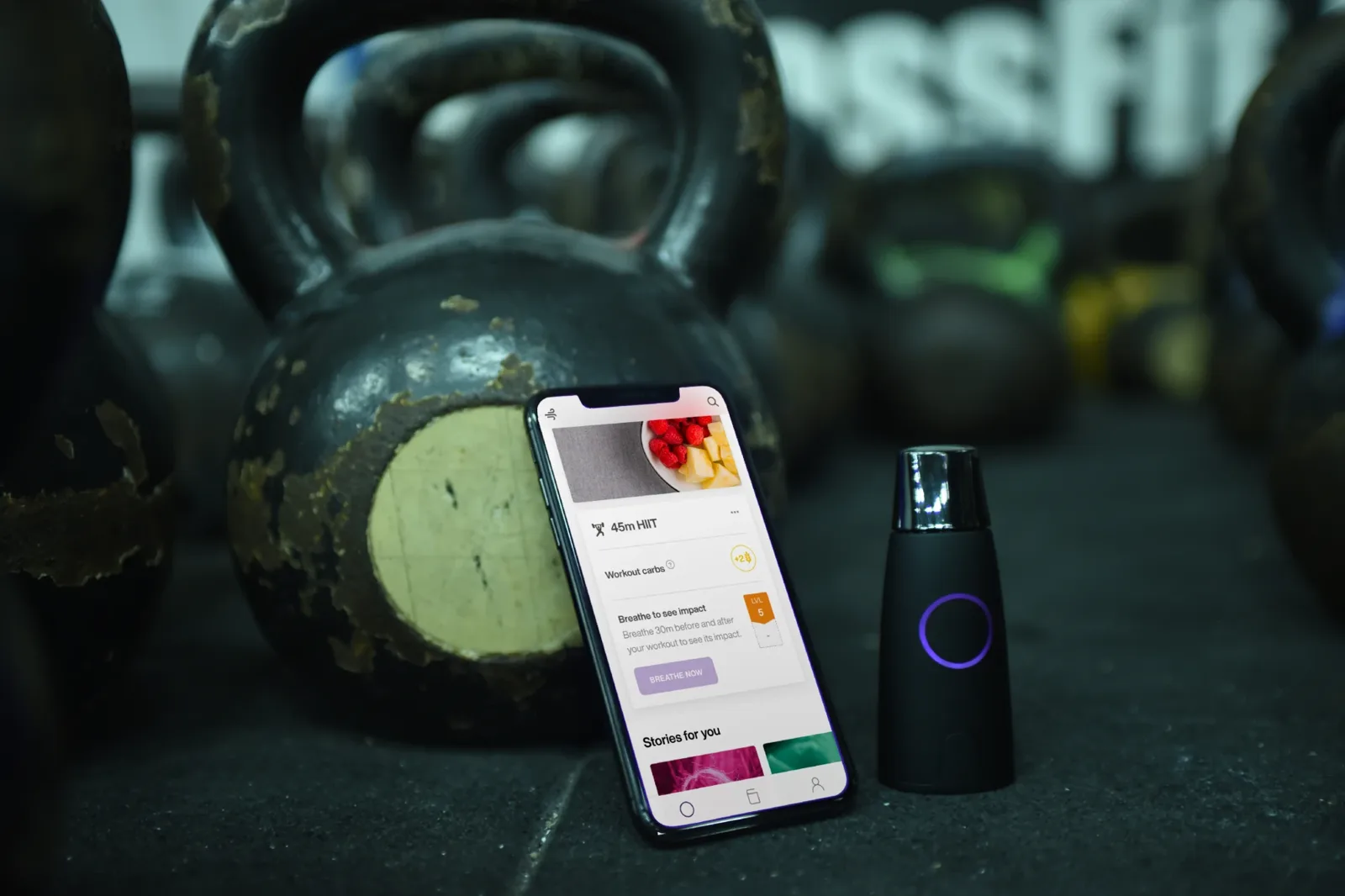
Your Lumen reading is a daily window into it. A morning score toward "fat burn" and a
quick switch after meals are the signals we coach toward, together with training, meal timing and sleep.
In the program: the goal is to restore that flexibility, so you're metabolic dysfunction free
and depend less on the tools over time.
1 · Muscle is your metabolic organ
Most people think of muscle as strength or looks. Metabolically, it's much more: skeletal muscle is where most of the
sugar in your blood goes after a meal.
~80%
of insulin-stimulated glucose uptake happens in skeletal muscle. When muscle is lost or becomes insulin
resistant, blood sugar has nowhere to go.1
Resistance training improves blood-sugar control and insulin sensitivity. The American Diabetes
Association recommends 2–3 resistance sessions per week for adults with diabetes, alongside aerobic activity.2
In the program: 3 full-body strength sessions per week, progressing over 12 weeks (Foundation → Build → Strength).
2 · The pre-diabetes window
1 in 3
US adults has pre-diabetes, and more than 8 in 10 of them don't know it.3
58%
lower risk of developing type 2 diabetes with a structured lifestyle program (activity + modest weight loss)
in the landmark Diabetes Prevention Program, compared with 31% for the drug metformin.4
Pre-diabetes is usually silent. It shows up as afternoon crashes, cravings and belly weight long before a diagnosis.
It's also the stage where behavior change has the strongest evidence.
In the program: the Metabolic Score screens for the warning signs, and GFC Lab can order A1c and glucose labs to get real numbers.
3 · Medication is a bridge, not the destination
GLP-1 medications are highly effective. Average weight loss was about 15% with semaglutide at
68 weeks and about 21% with the highest dose of tirzepatide at 72 weeks in their pivotal trials.5,6
25–40%
of the weight lost can be lean (non-fat) mass, measured by DXA scans in trial sub-studies where participants had general diet and
activity advice but no structured strength-training program.5,6
⅔
of the lost weight was regained within a year of stopping semaglutide in the STEP 1 extension.7
Higher protein intake during weight loss helps preserve lean mass, especially combined with resistance training.8
In the program: if you use a GLP-1 through GFC Lab, we pair it with strength training and protein targets from day one, so what you lose is fat. Then we build the habits that hold the result when the dose comes down.
4 · When and how you eat matters
Food order changes the glucose response. Eating vegetables and protein before carbohydrates
produced substantially lower post-meal glucose and insulin than the same meal with carbs first.9
Short walks after meals lower post-meal blood sugar. In people with type 2 diabetes, a 10-minute walk after each meal
lowered post-meal glucose more than one 30-minute walk at another time of day, with the biggest effect after dinner.10
Lumen estimates which fuel you're burning by measuring CO₂ in a single breath, similar in principle to the
respiratory exchange ratio a lab measures with a metabolic cart. A validation study in healthy young adults found its readings were significantly
correlated with the metabolic cart's.11 We use it as a daily feedback signal for meal timing and carbohydrate
choices, not as a diagnostic test.
In the program: a morning Lumen breath, protein-and-vegetables-first meals, and a 10-minute walk after your biggest meal, logged in your daily check-in.
5 · Sleep is metabolic
Sleep restriction impairs glucose tolerance. In a classic study, healthy young men restricted to 4 hours
of sleep for 6 nights processed glucose markedly worse than when fully rested.12
In the program: sleep hours are part of your daily check-in and a standing topic in every coaching session.
6 · Accountability is the missing ingredient
Behavior change works best when it's intensive and ongoing. The US Preventive Services Task Force
recommends intensive, multicomponent behavioral interventions for adults with obesity. The effective programs it reviewed
typically involved 12 or more sessions in the first year.13
In the program: a 1:1 session every two weeks (26 a year), plus daily check-ins your coach reviews. Discipline, accountability, consistency.
DeFronzo RA, Tripathy D. Skeletal muscle insulin resistance is the primary defect in type 2 diabetes. Diabetes Care. 2009;32(Suppl 2):S157–S163.
Colberg SR, et al. Physical activity/exercise and diabetes: a position statement of the American Diabetes Association. Diabetes Care. 2016;39(11):2065–2079.
Centers for Disease Control and Prevention. National Diabetes Statistics Report. cdc.gov/diabetes.
Diabetes Prevention Program Research Group (Knowler WC, et al.). Reduction in the incidence of type 2 diabetes with lifestyle intervention or metformin. N Engl J Med. 2002;346:393–403.
Wilding JPH, et al. Once-weekly semaglutide in adults with overweight or obesity (STEP 1). N Engl J Med. 2021;384:989–1002.
Jastreboff AM, et al. Tirzepatide once weekly for the treatment of obesity (SURMOUNT-1). N Engl J Med. 2022;387:205–216.
Wilding JPH, et al. Weight regain and cardiometabolic effects after withdrawal of semaglutide: the STEP 1 trial extension. Diabetes Obes Metab. 2022;24(8):1553–1564.
Cava E, Yeat NC, Mittendorfer B. Preserving healthy muscle during weight loss. Adv Nutr. 2017;8(3):511–519.
Shukla AP, et al. Food order has a significant impact on postprandial glucose and insulin levels. Diabetes Care. 2015;38(7):e98–e99.
Reynolds AN, et al. Advice to walk after meals is more effective for lowering postprandial glycaemia in type 2 diabetes mellitus than advice that does not specify timing. Diabetologia. 2016;59:2572–2578.
Lorenz KA, et al. A handheld metabolic device (Lumen) to measure fuel utilization in healthy young adults: device validation study. Interactive Journal of Medical Research. 2021.
Spiegel K, Leproult R, Van Cauter E. Impact of sleep debt on metabolic and endocrine function. Lancet. 1999;354:1435–1439.
US Preventive Services Task Force. Behavioral weight loss interventions to prevent obesity-related morbidity and mortality in adults: recommendation statement. JAMA. 2018;320(11):1163–1171.
Goodpaster BH, Sparks LM. Metabolic flexibility in health and disease. Cell Metab. 2017;25(5):1027–1036.